
When you’re deciding whether to buy an air tool, how do you know if your compressor is powerful enough to run it? Or, when you go to buy a new air compressor, how do you figure out how big of a compressor you need without buying capacity you’ll never use?
Personally, I enjoy using air tools for a number of motorcycle maintenance tasks, and have read up a bit on them over the years. Unlike electric power tools, though, it’s not as simple to figure out how much power you need to run a specific tool. For corded tools, most of them run on a 120-volt wall outlet and it’s just a matter of making sure the circuit that connects to the outlet you’re plugging it into has enough amps available. With cordless tools, it’s simply a matter of making sure the battery is charged.
For air tools, it’s more complicated. Sure, there’s the standard cubic feet per minute (SCFM) measurement of how much air volume a tool needs to work. But there’s more to determining how much air power is needed than that one figure. If a tool is one that’s used for long, continuous work – such as paint guns, sanders or even die grinders – you’ll want a compressor that puts out more air than the tool requires. For tools used in short bursts – such as impact wrenches, nail guns and air ratchets – you may be able to use a less powerful compressor than the tool’s SCFM figure says it needs (as long as there’s enough downtime between uses for the compressor to re-pressurize).
I’ve had Harbor Freight employees tell me it can be a struggle for them to help customers figure out which compressor to buy or whether a customer’s compressor can run a specific tool. I realized something needed to be done to help bridge that knowledge gap so that DIYers can more easily get into using air tools and enjoy the benefits they offer over other types of power tools – such as faster spin rates, usually cheaper tool prices and repairability.
To me, Harbor Freight is a good place to buy air tools – especially if you’re just getting into doing your own automotive or motorcycle maintenance and aren’t sure how much you’ll be using them. Harbor Freight’s air compressors usually get very good reviews and are another good place to start your foray into using air tools.
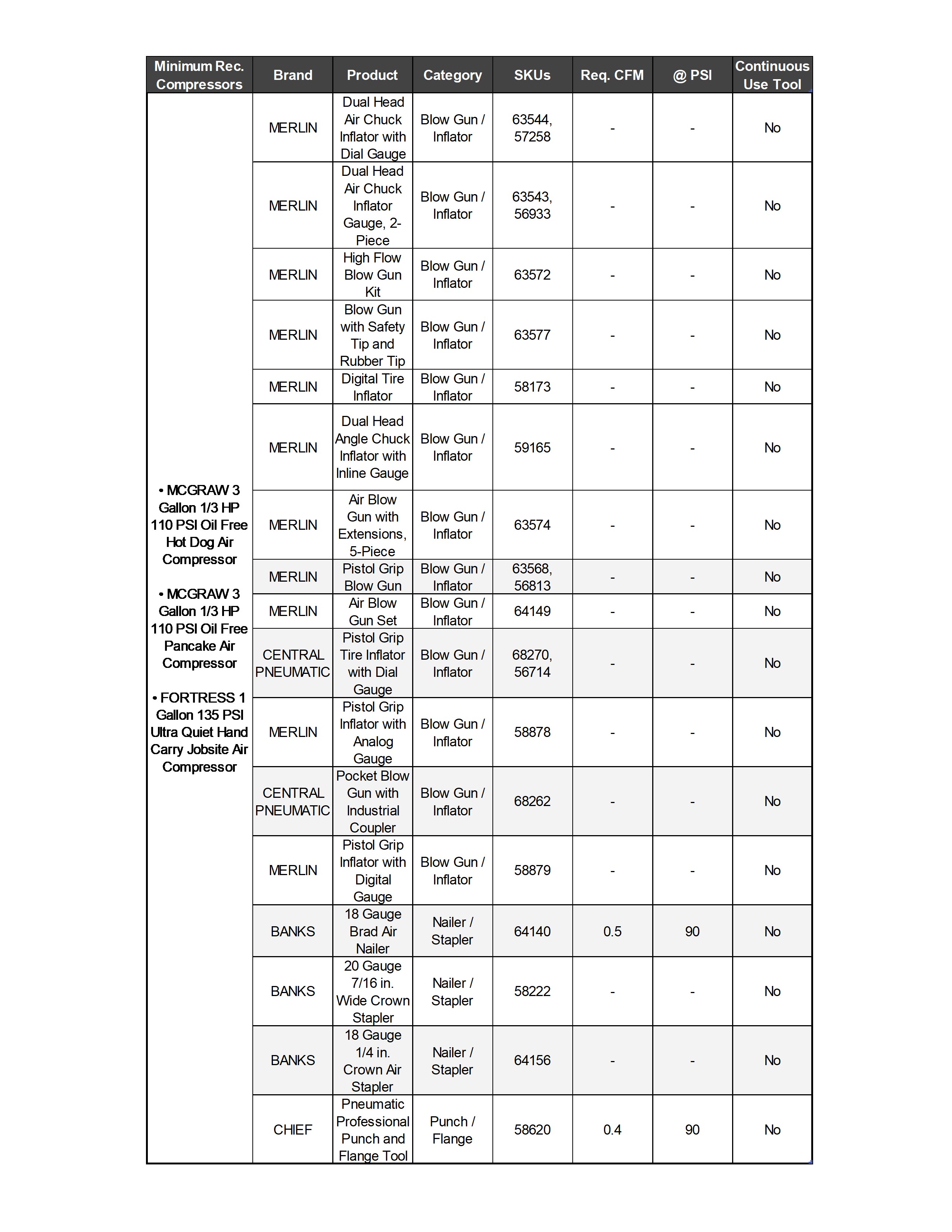
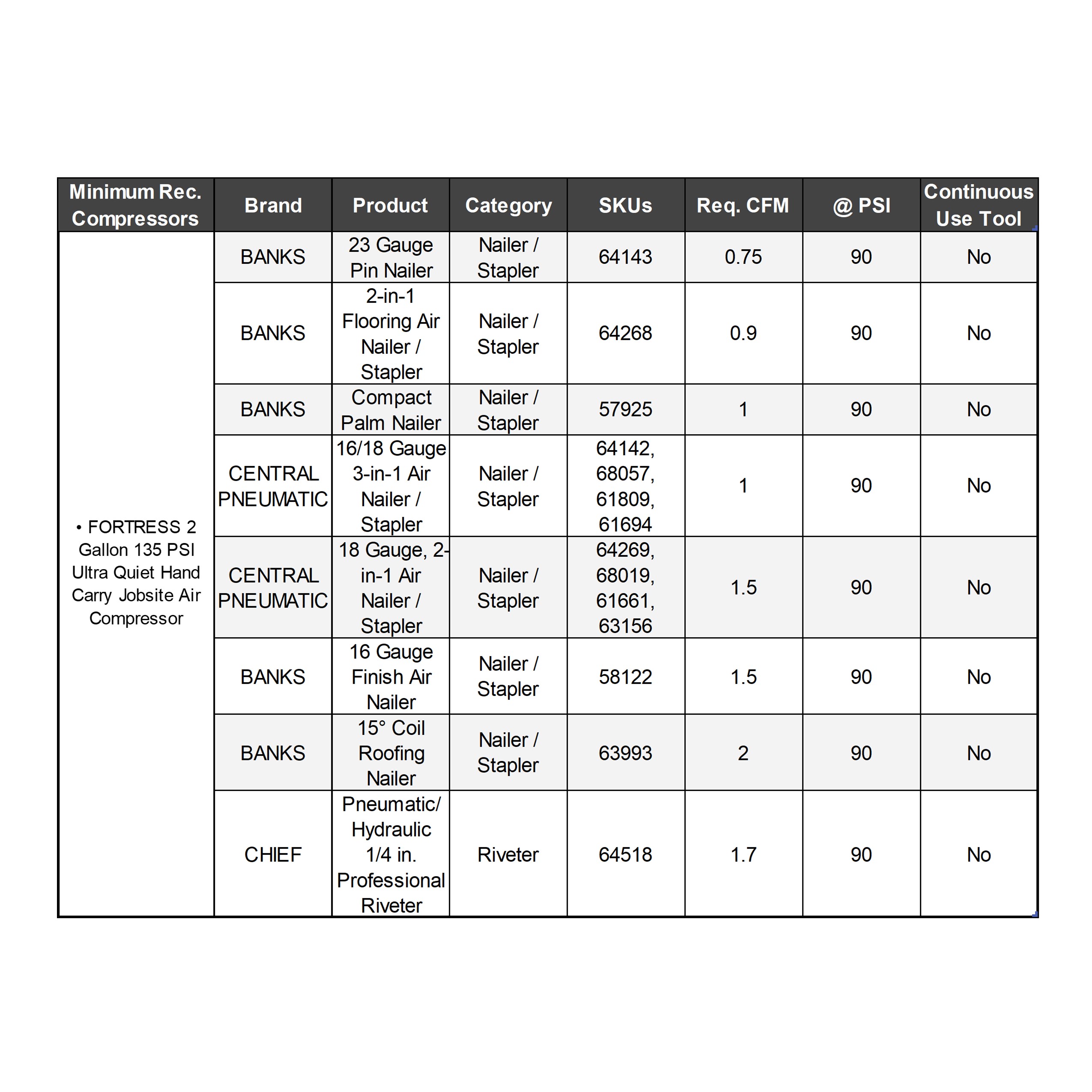
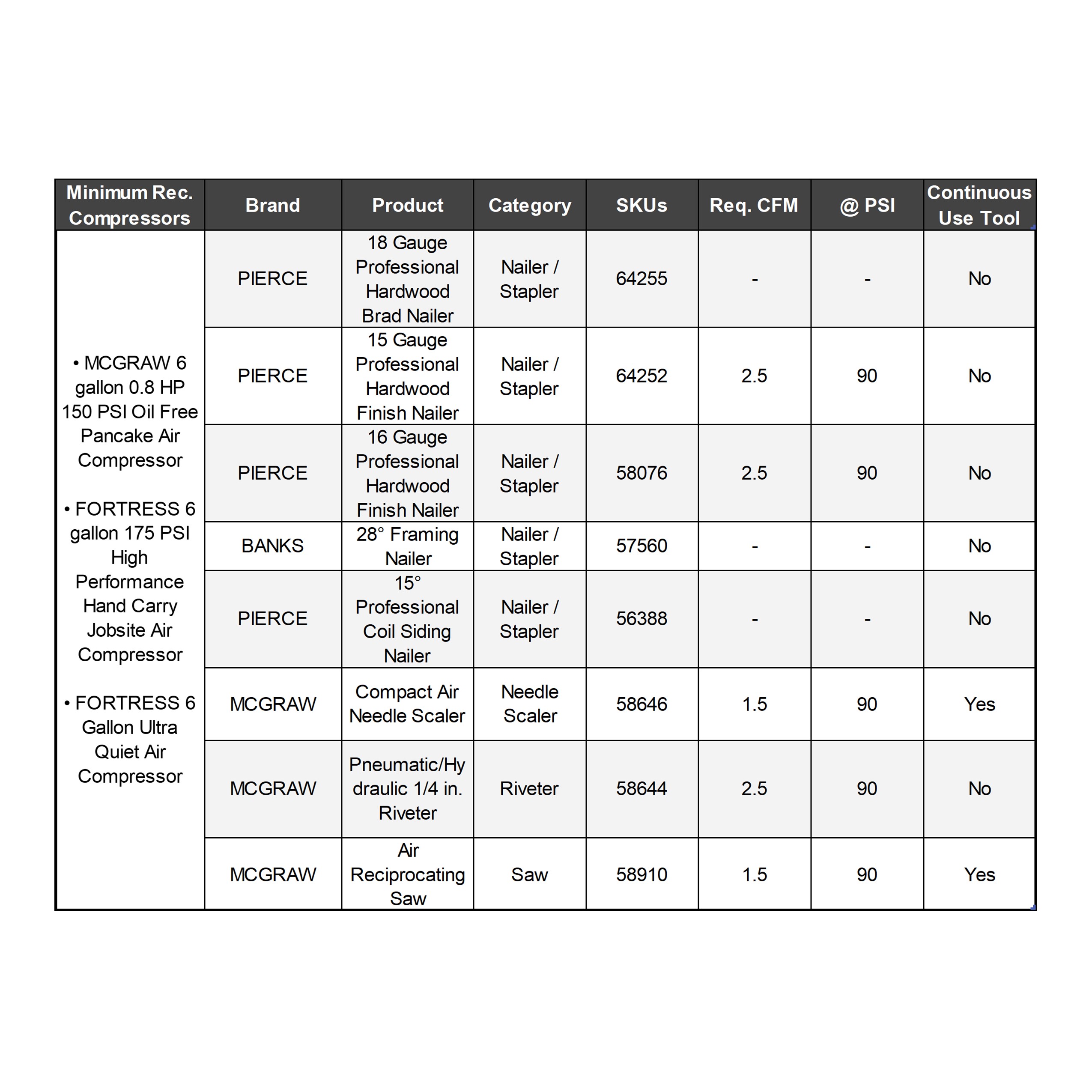
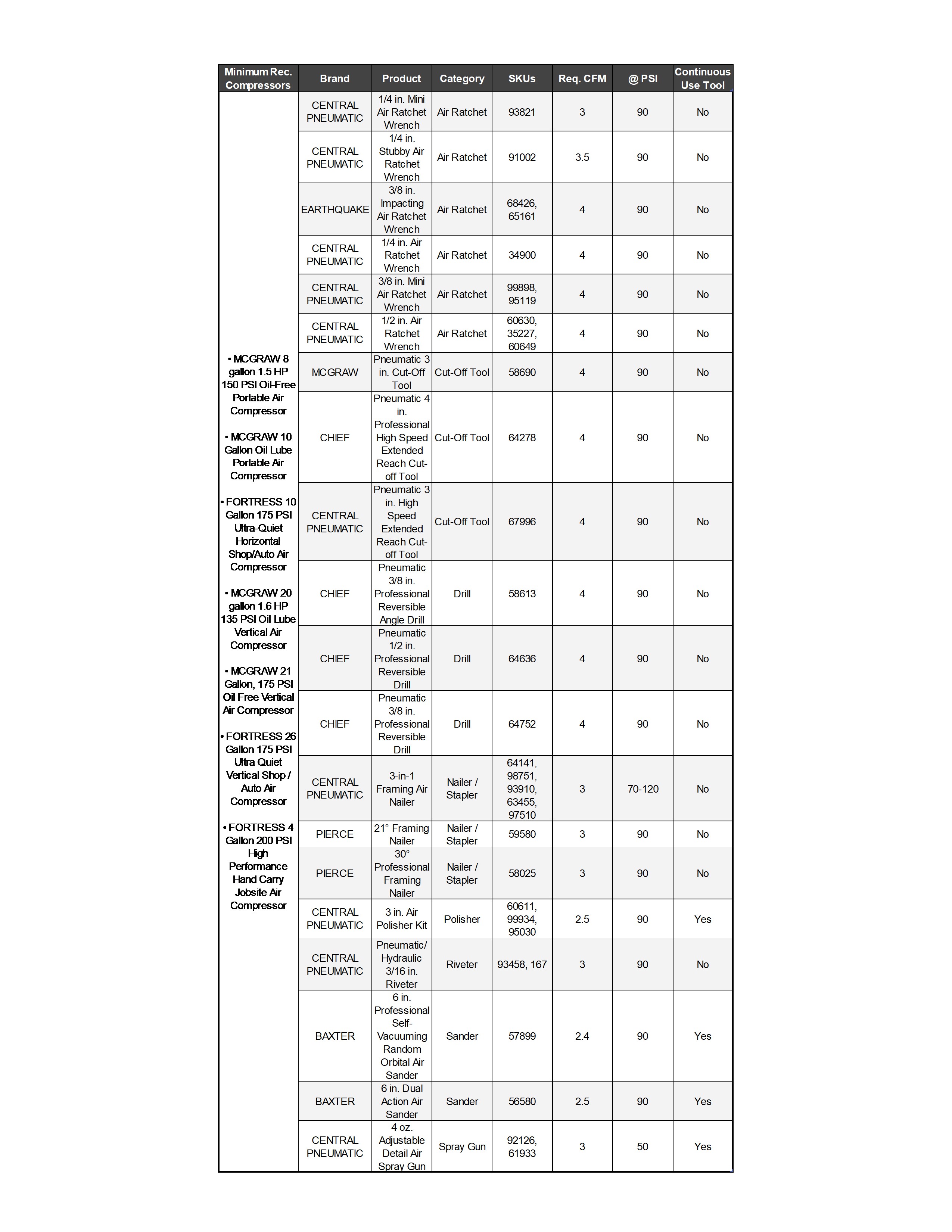
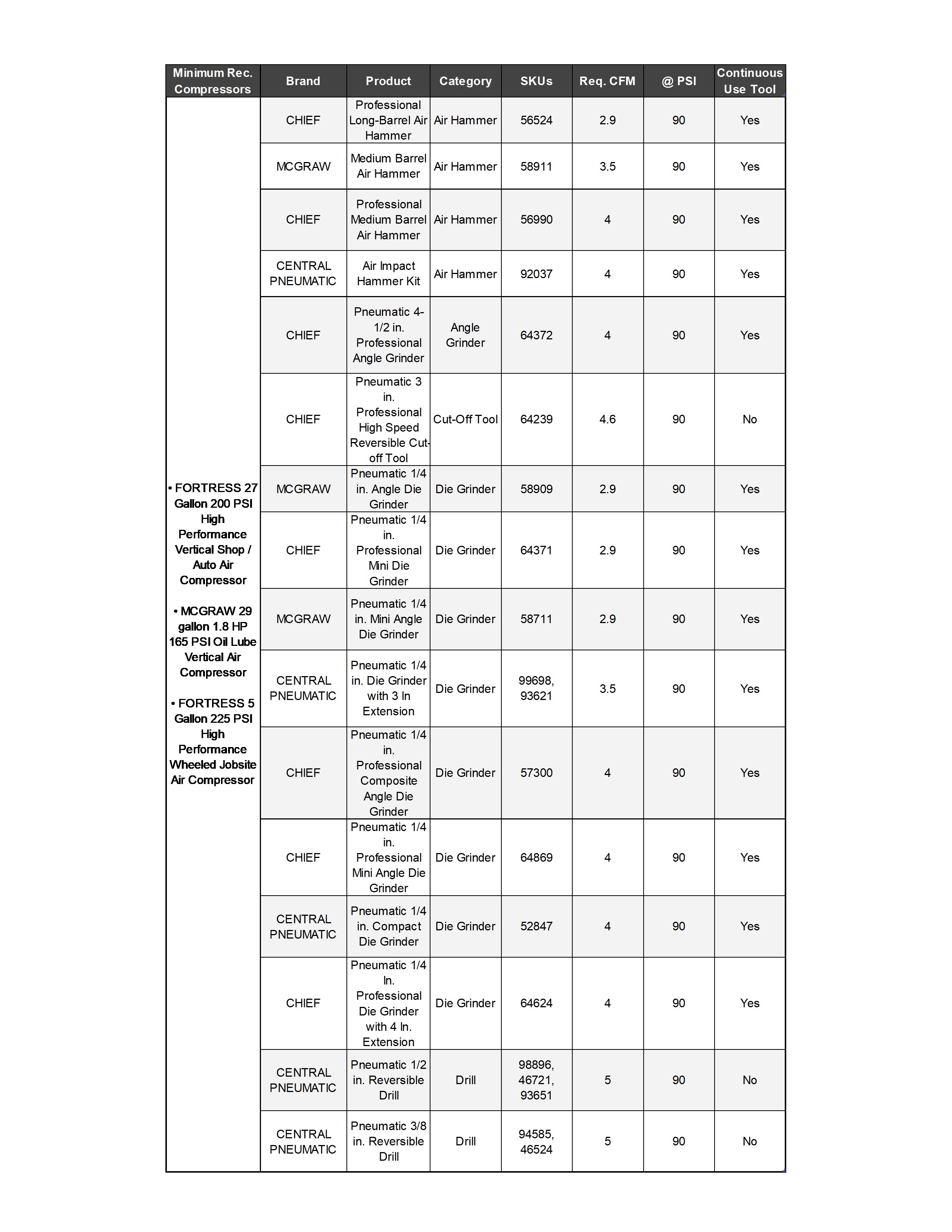
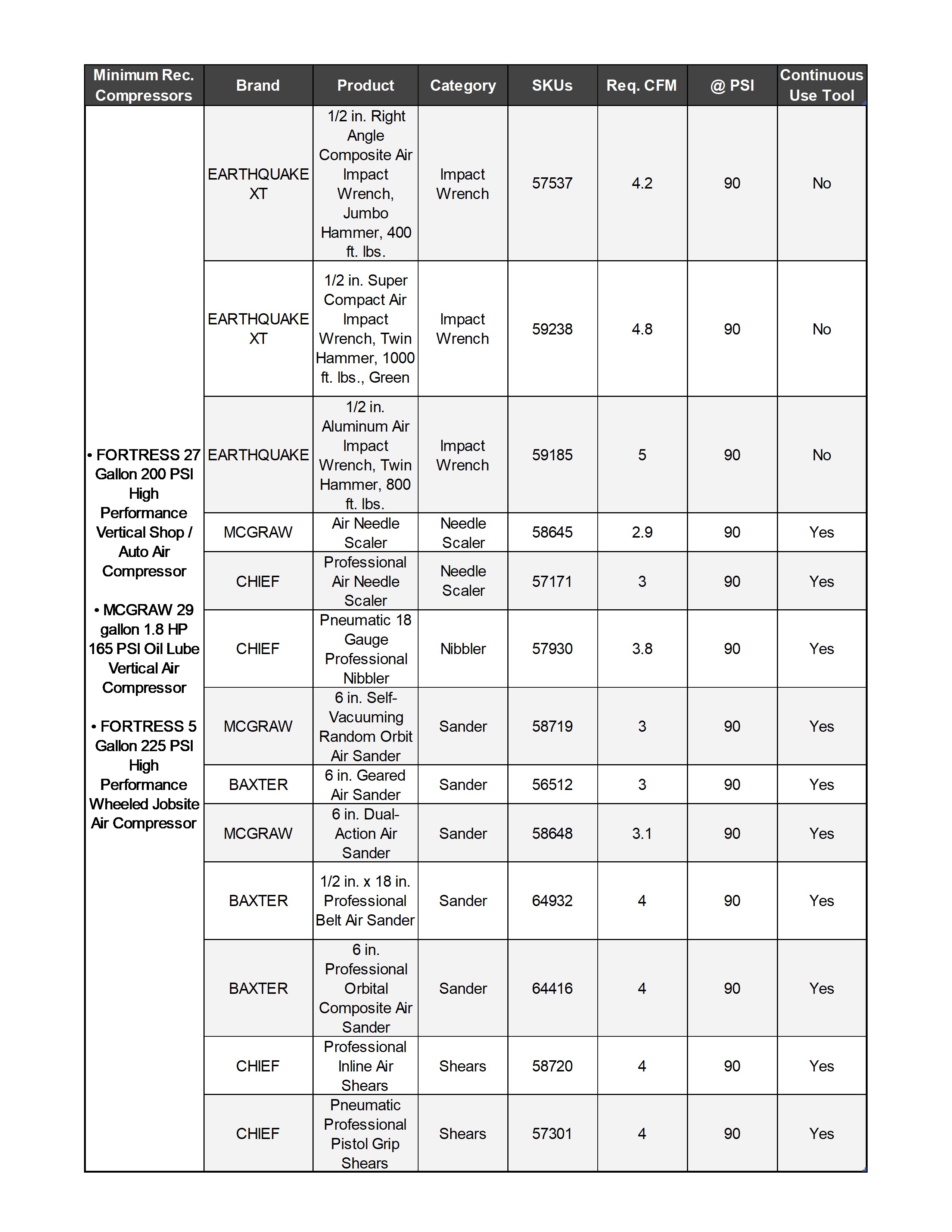
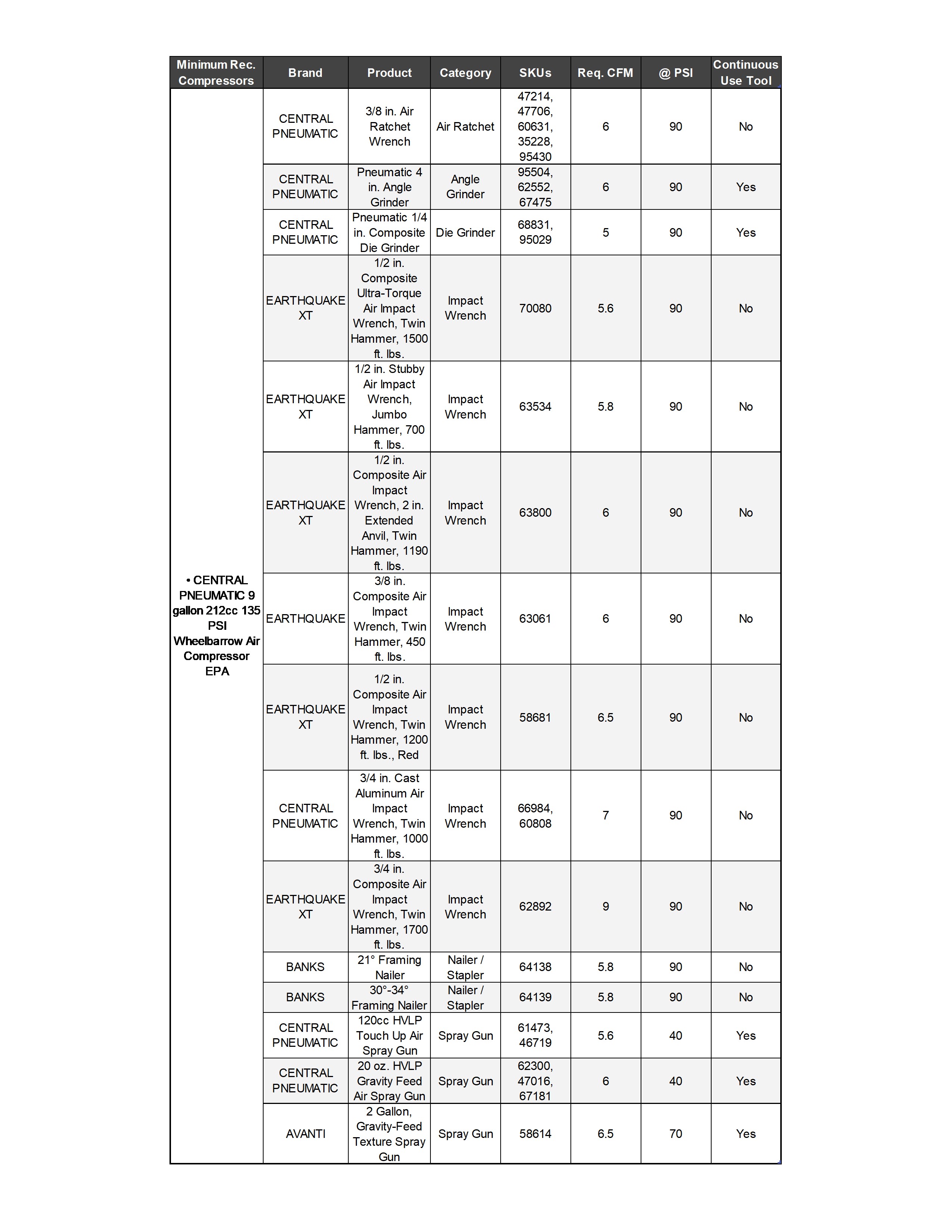
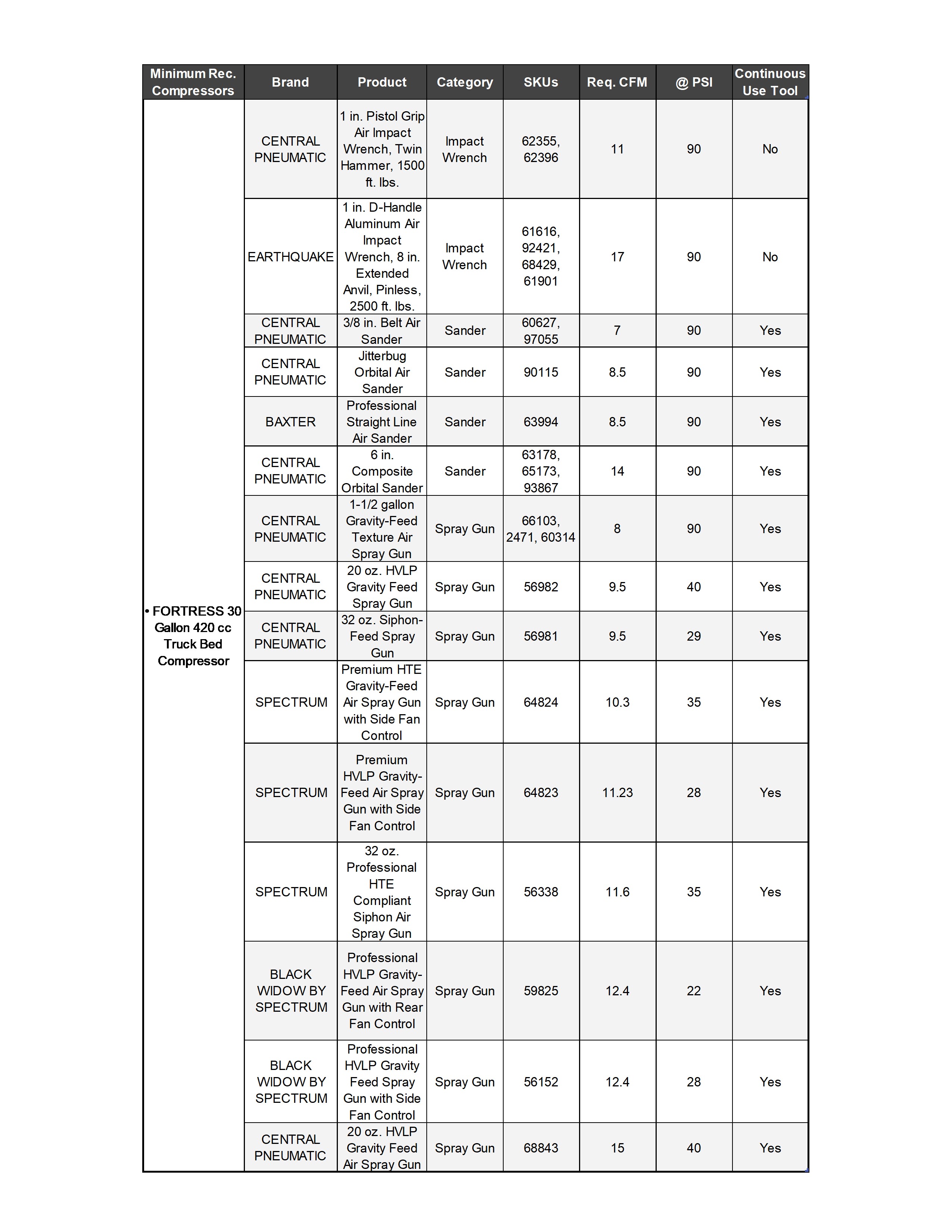
For the reasons stated above, I created a set of tables that lists which the minimum air compressor you can reasonably use for a given Harbor Freight air tool.
Each tool that is considered a “continuous use tool” is identified as such in the far-right column and is why some tools are recommended to be used with a compressor that puts out at least 25 percent (if not 50 percent) more SCFM than the tool’s listed minimum air requirement. For non-continuous use tools, the minimum air requirement is the SCFM listed for the tool. You may be able to use a smaller compressor, but that could void the tool’s warranty.
The information in the tables below was collected from March 2024 to June 2024. The tables are organized in ascending order in terms of compressor output, and there are two tables for one of the compressor groups because of the number of tools associated with it.
You also can download a printable version of the guide or view the original spreadsheet on Google Sheets.








 The Motorcycling Blog
Leave a reply to elliemarieard Cancel reply